

Condition: Near Mint
Height: 5″ (12.5cm)
Width: 7.5″ (18.75cm)
Length: 5″ (12.5cm)
Diameter: 5″ (12.5cm)
Year Manufactured: 1970
Photos form part of the description. Exact item shown; please review all images carefully.
This is…
Condition: Near Mint
Height: 5″ (12.5cm)
Width: 7.5″ (18.75cm)
Length: 5″ (12.5cm)
Diameter: 5″ (12.5cm)
Year Manufactured: 1970
Photos form part of the description. Exact item shown; please review all images carefully.
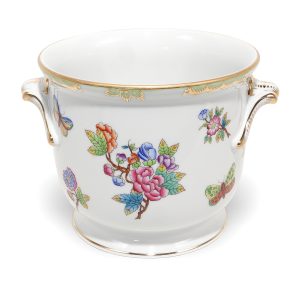
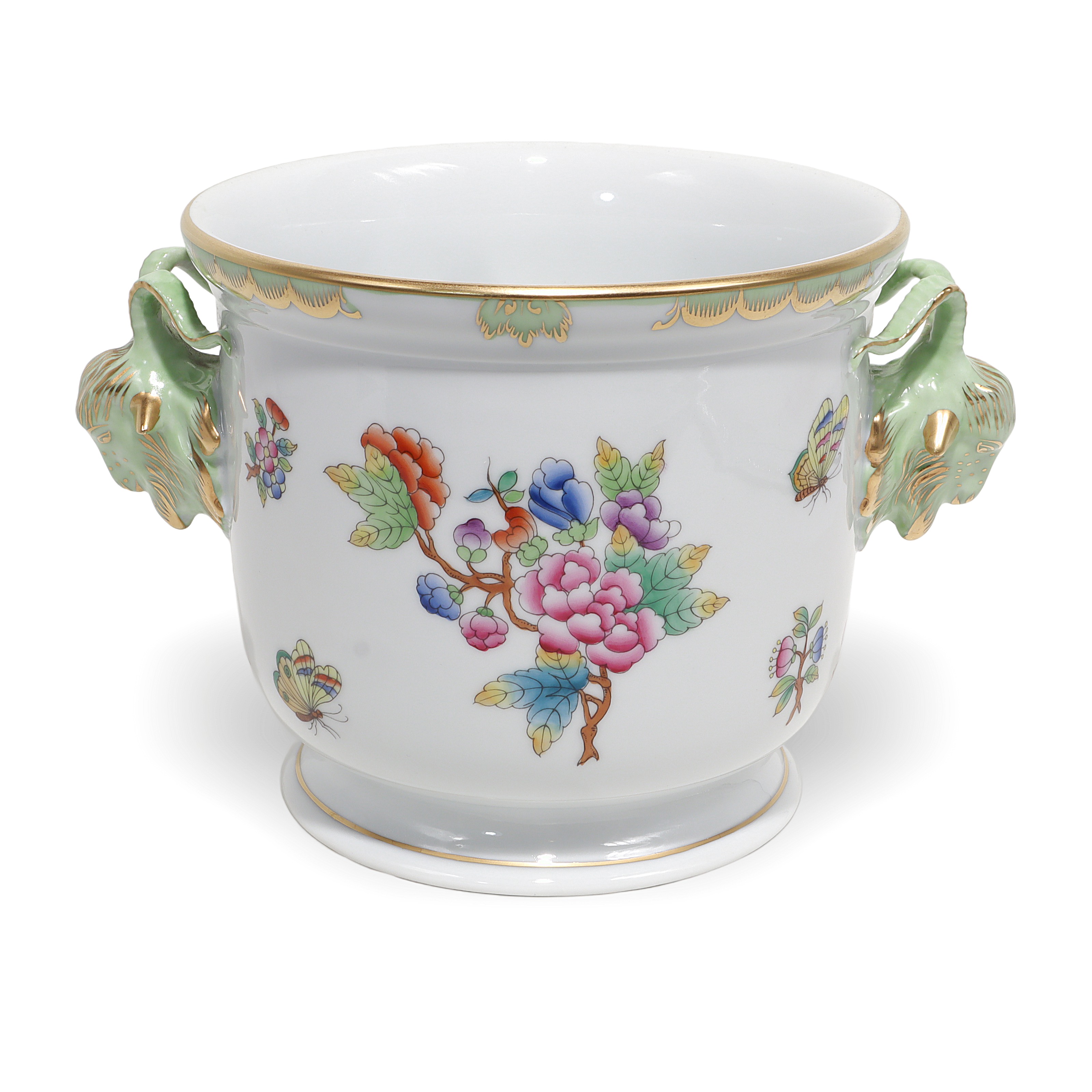
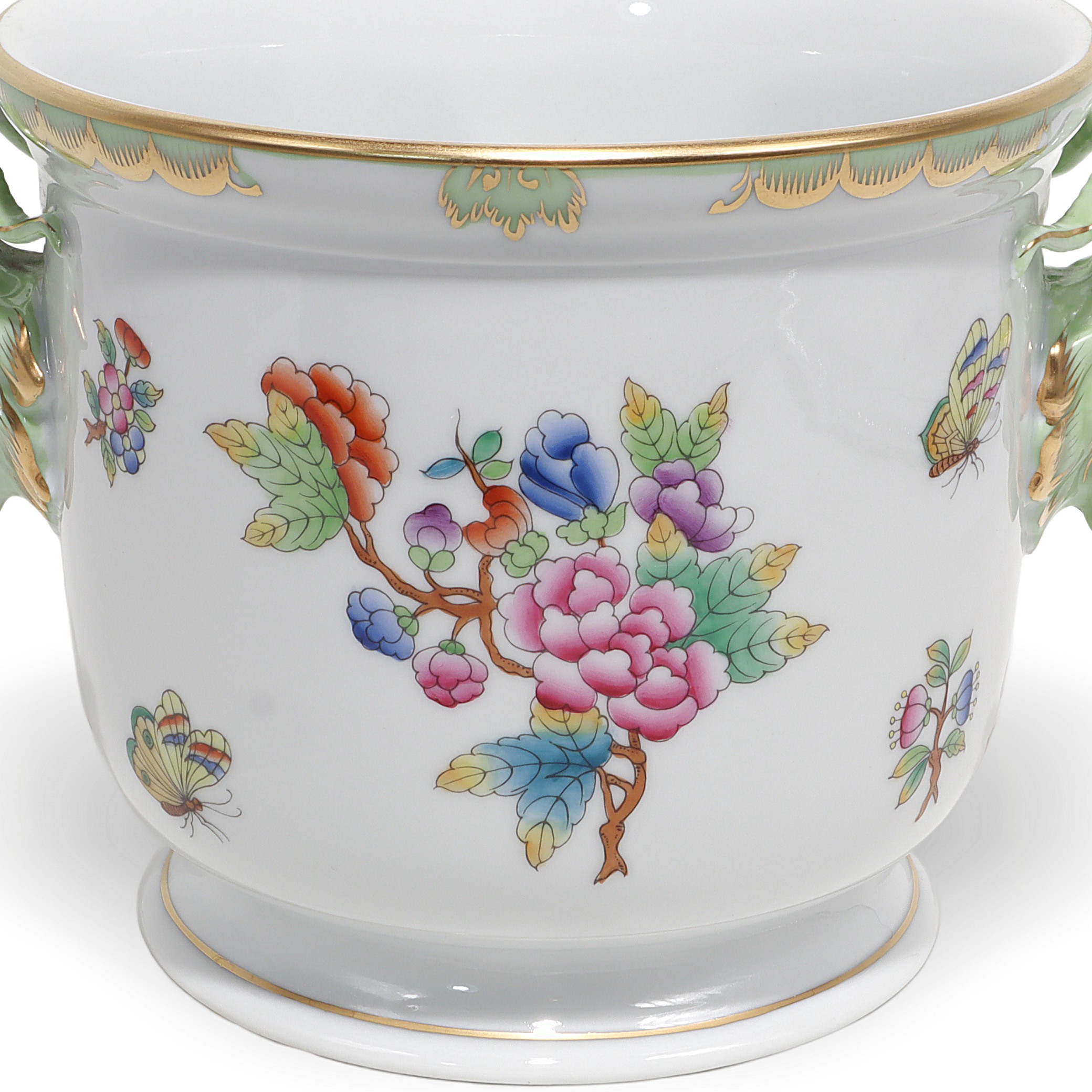
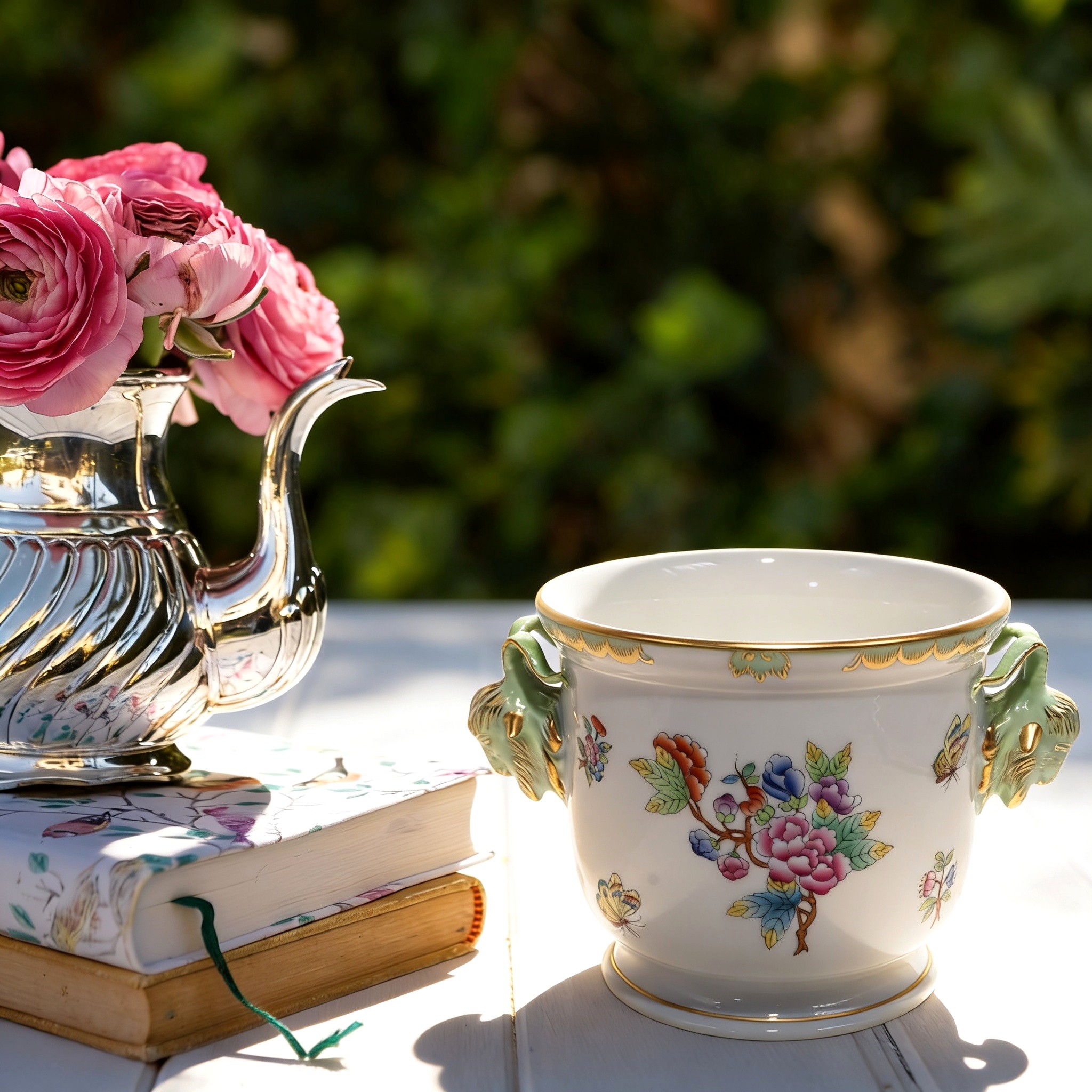
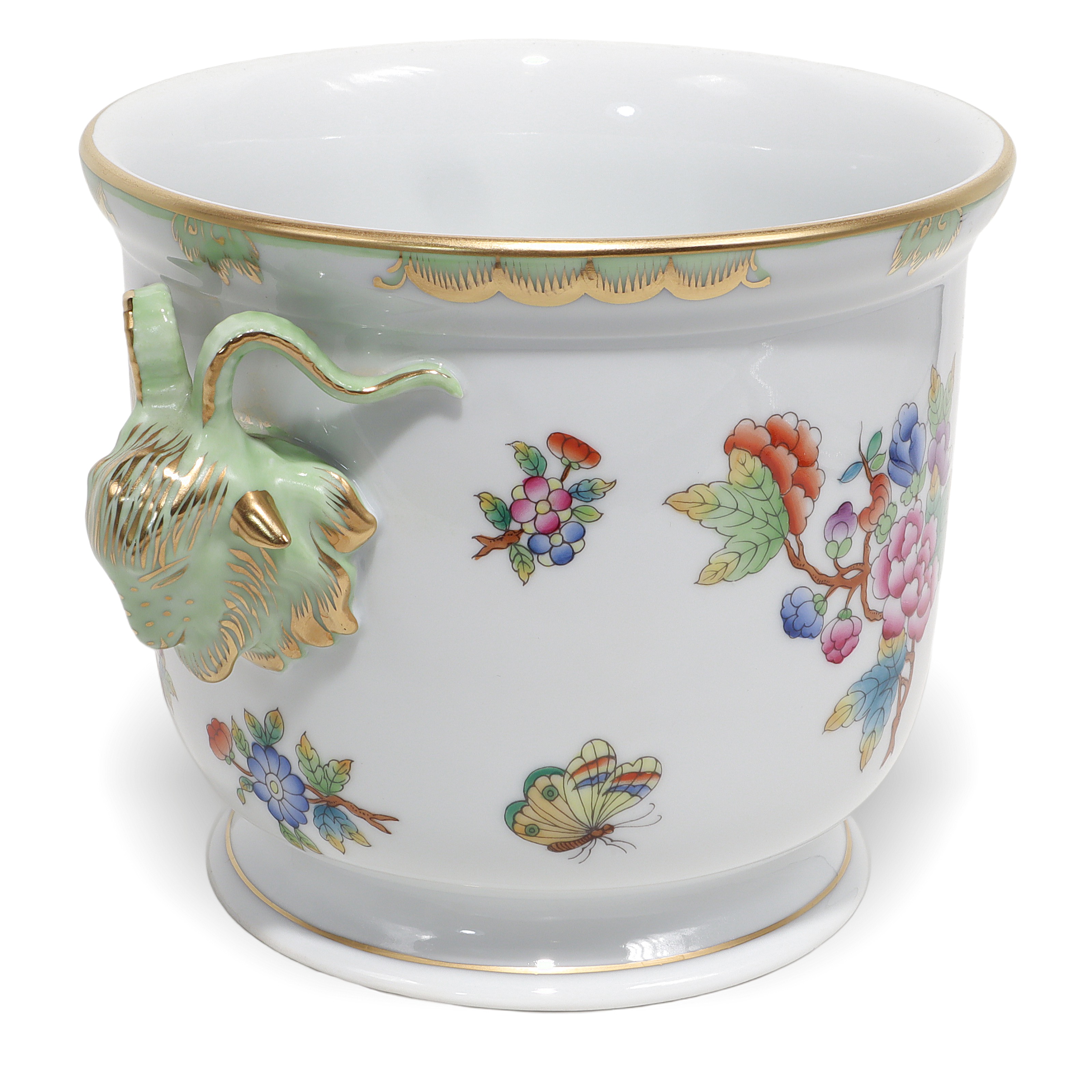
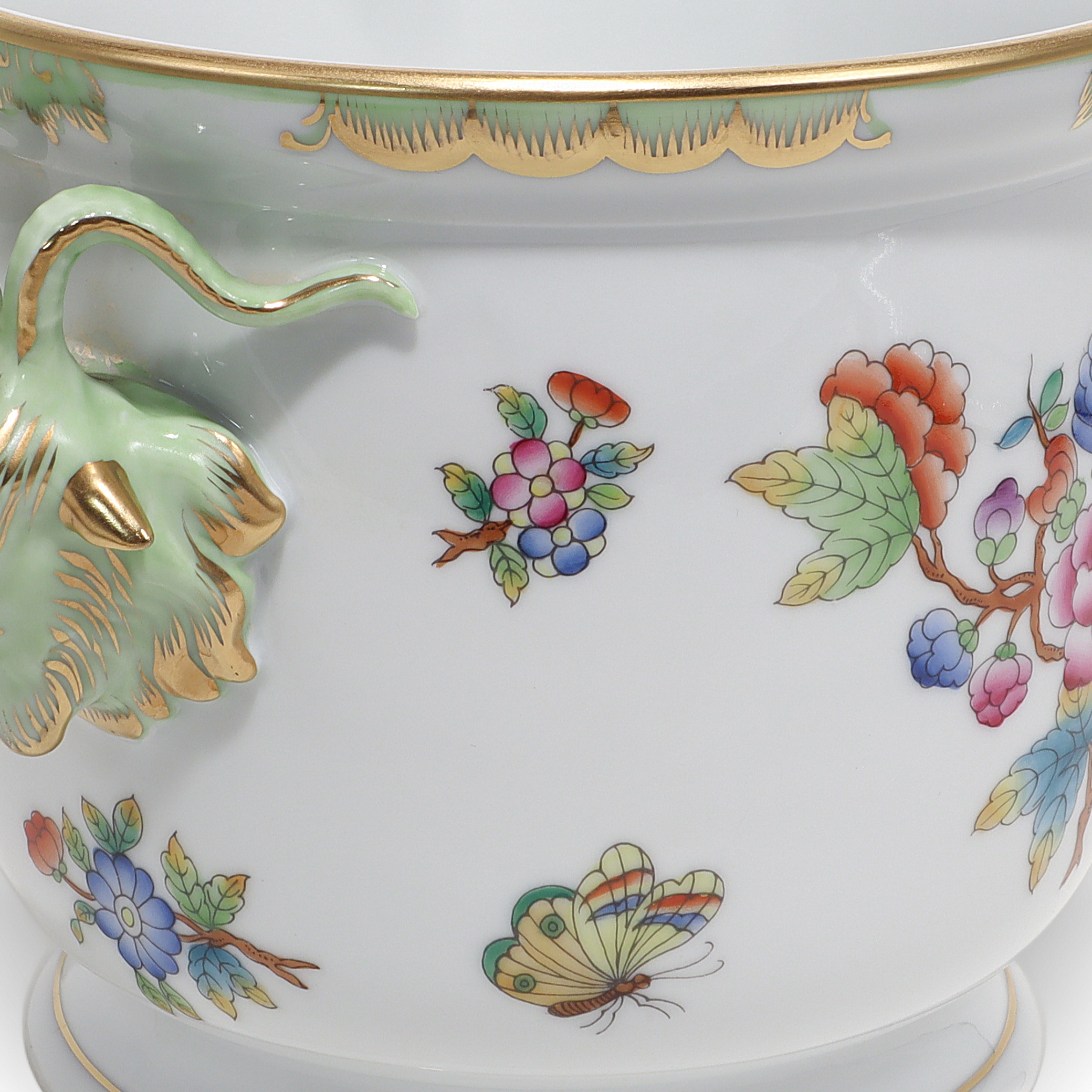
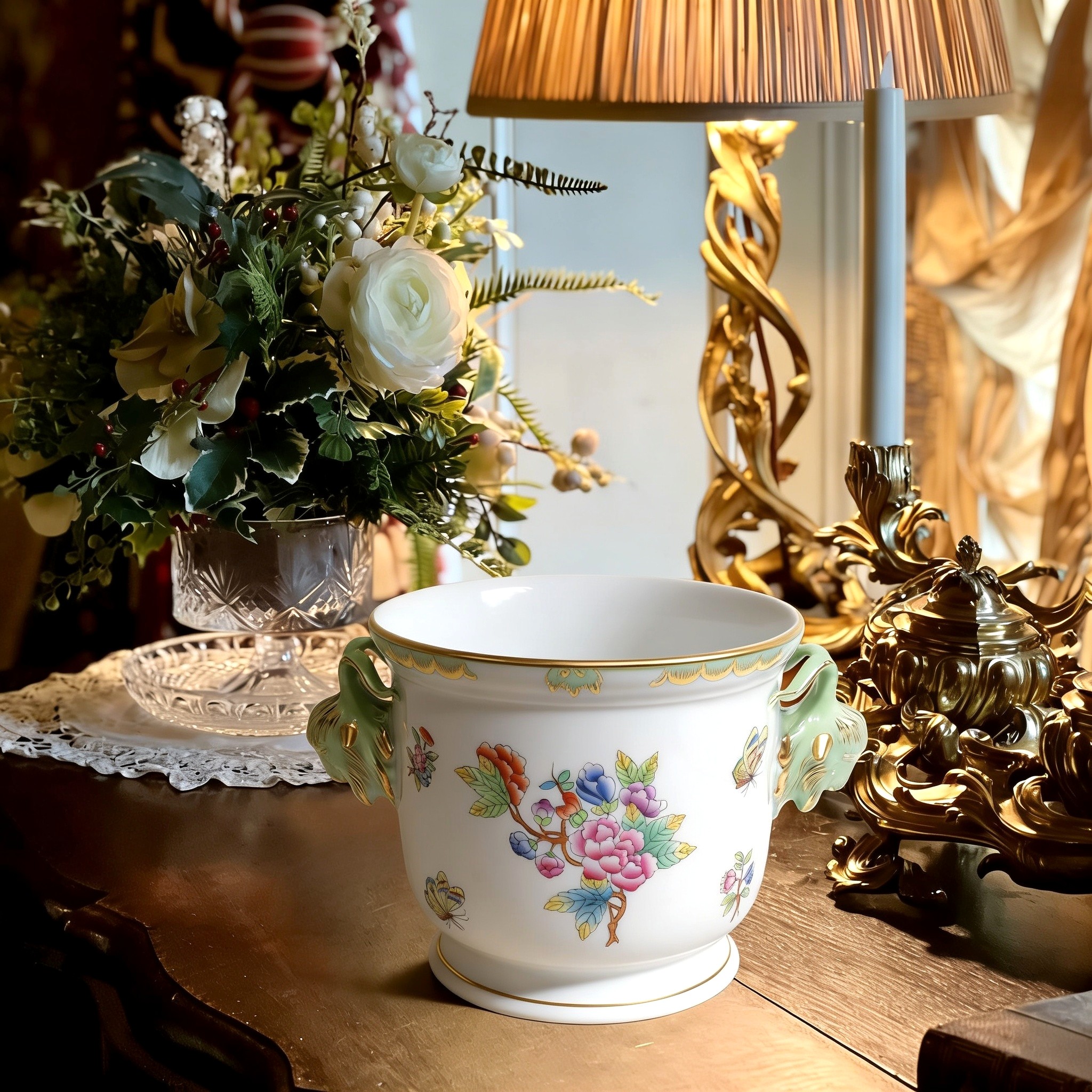
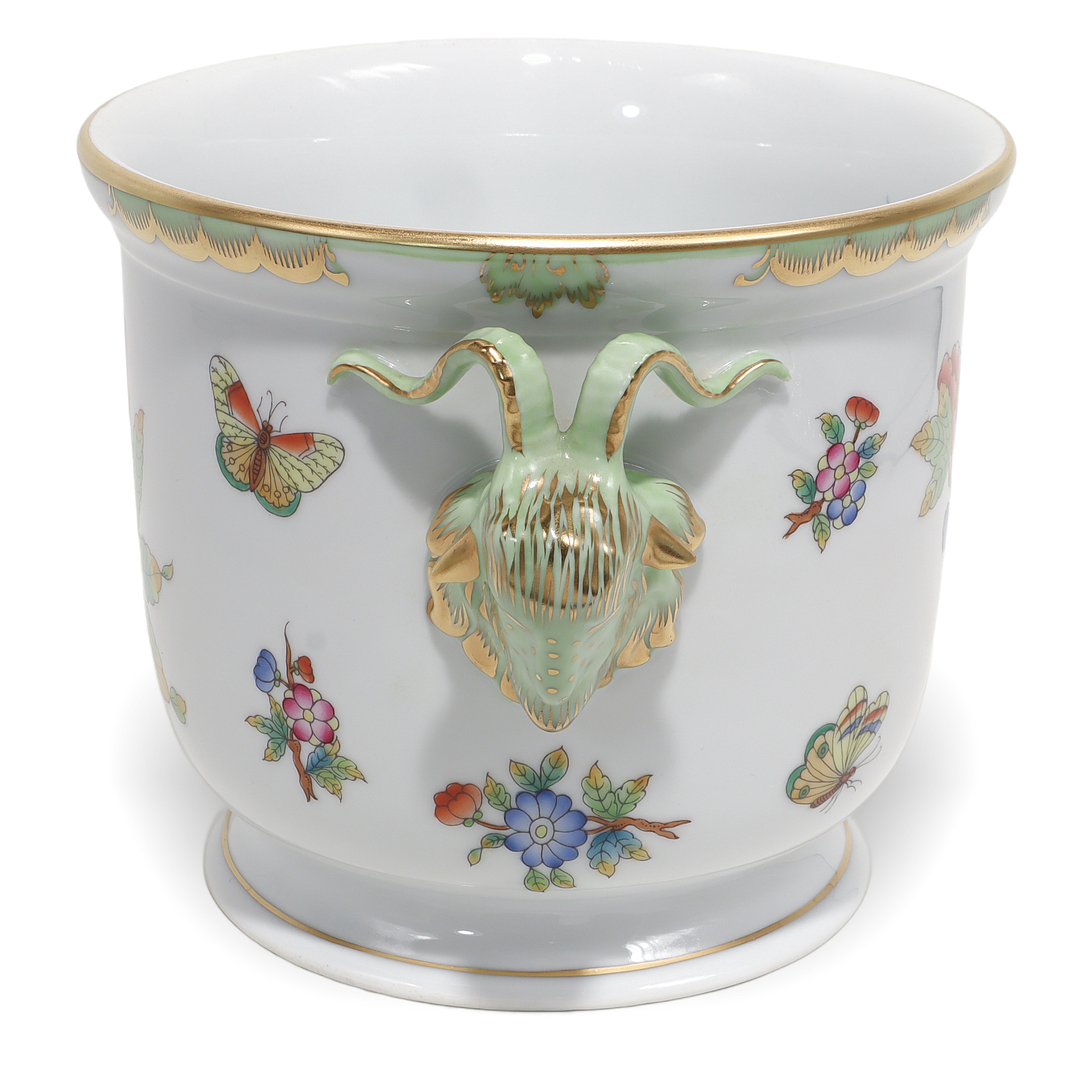
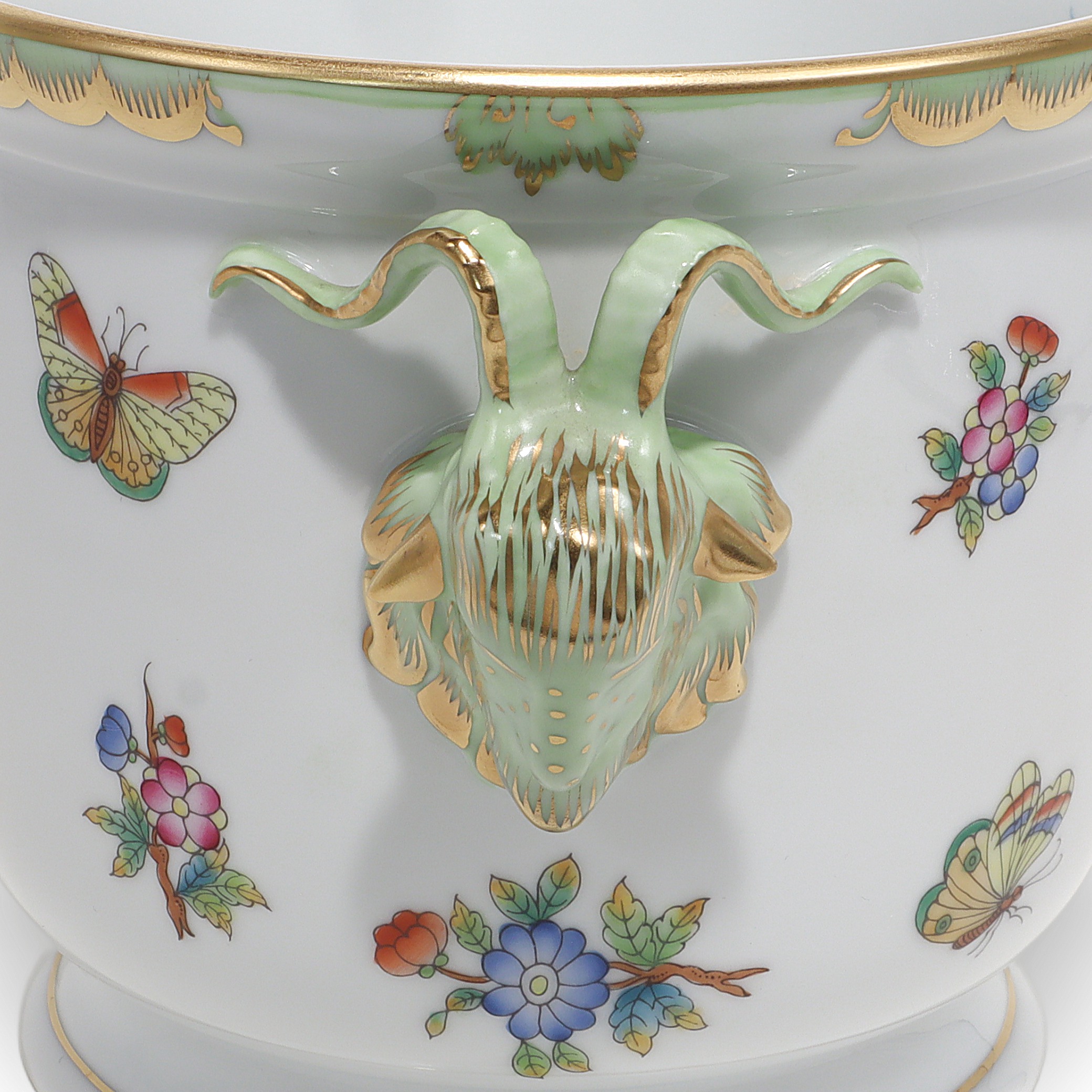
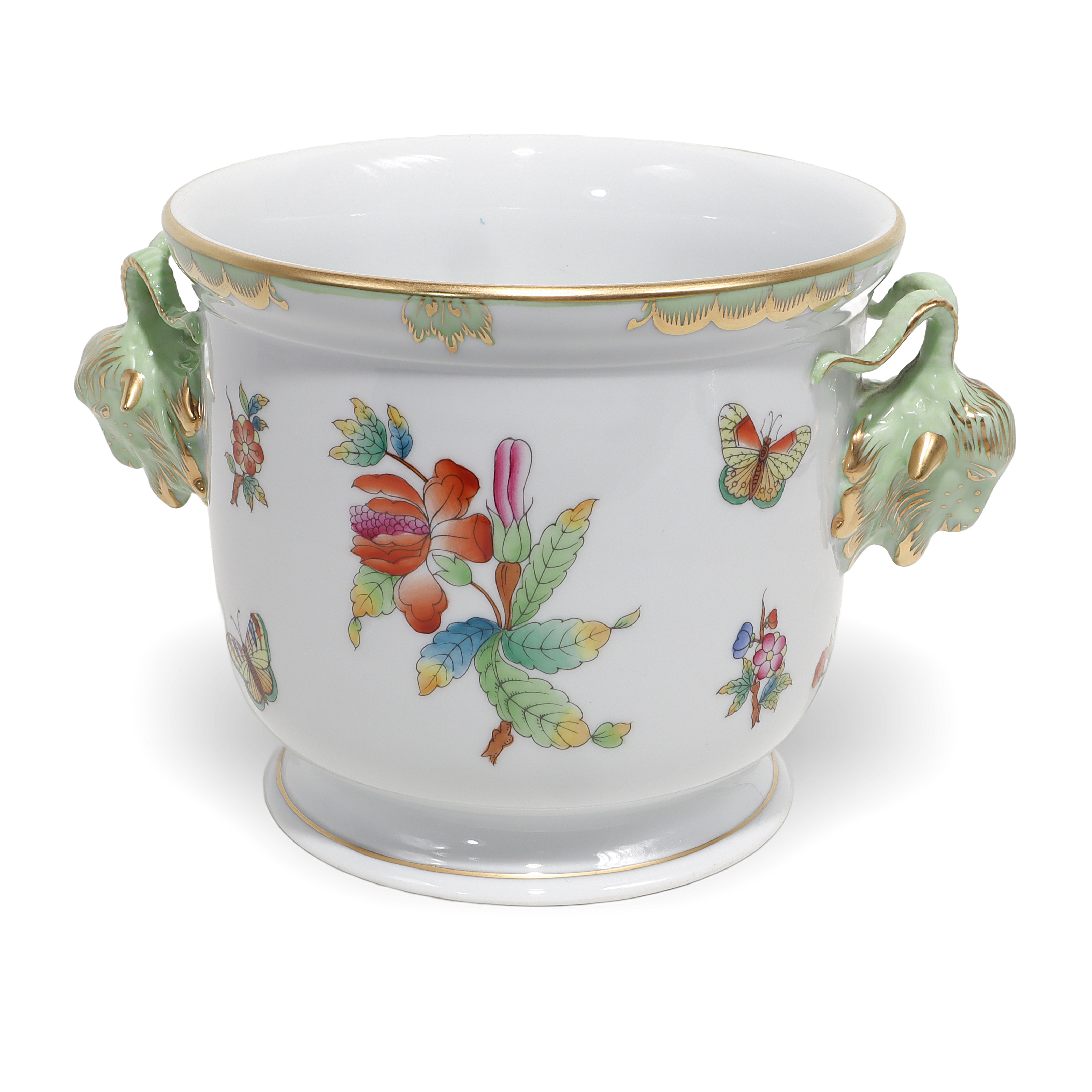
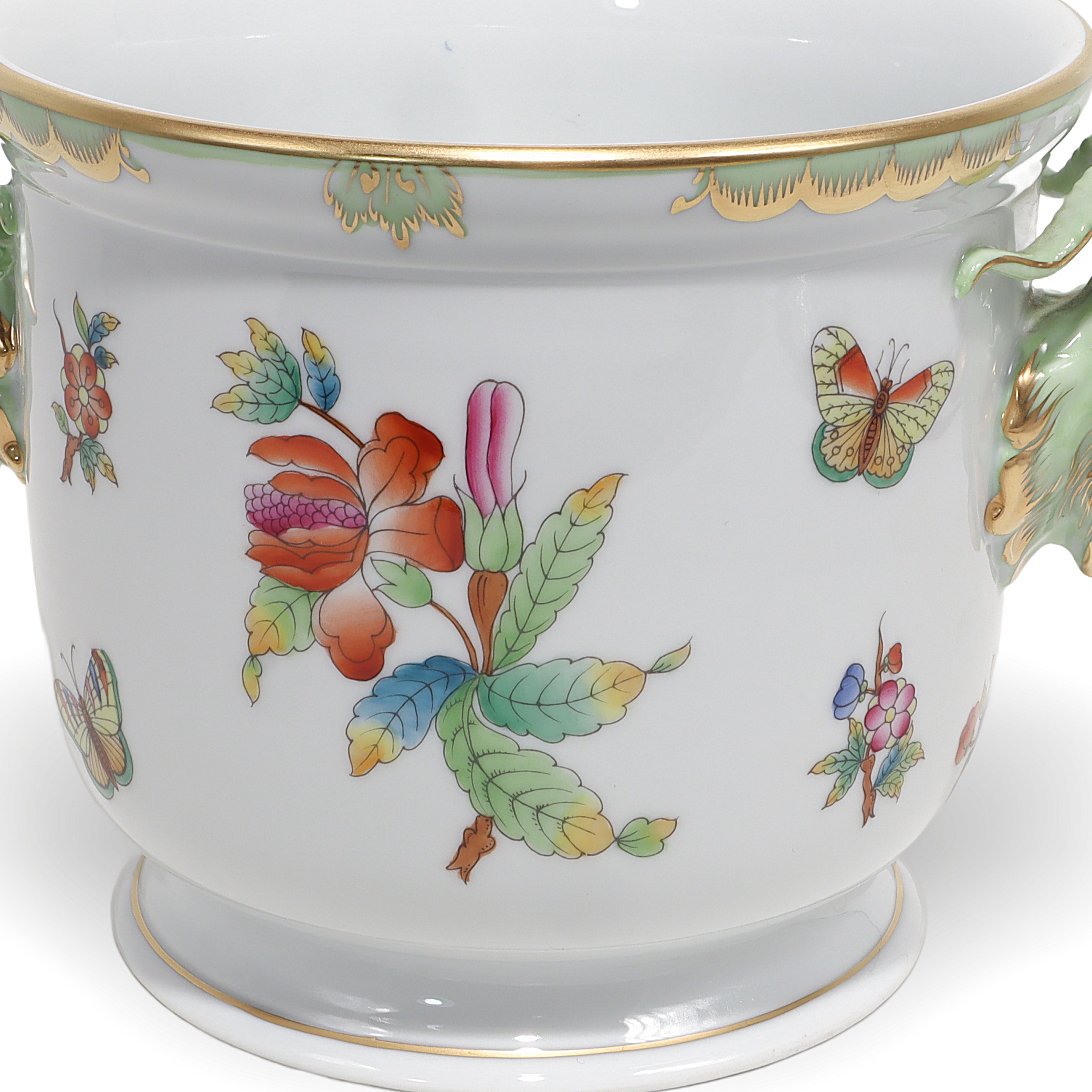
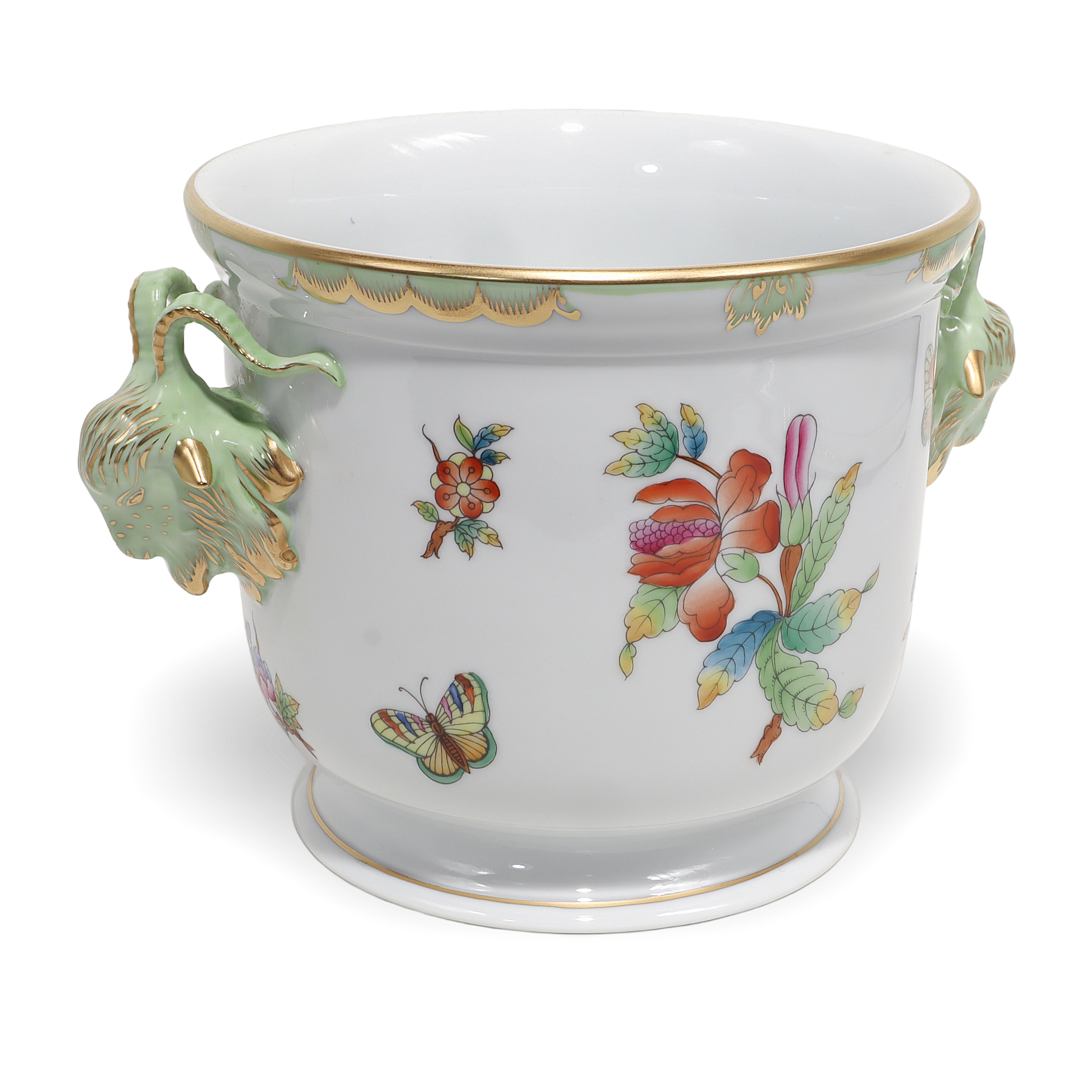
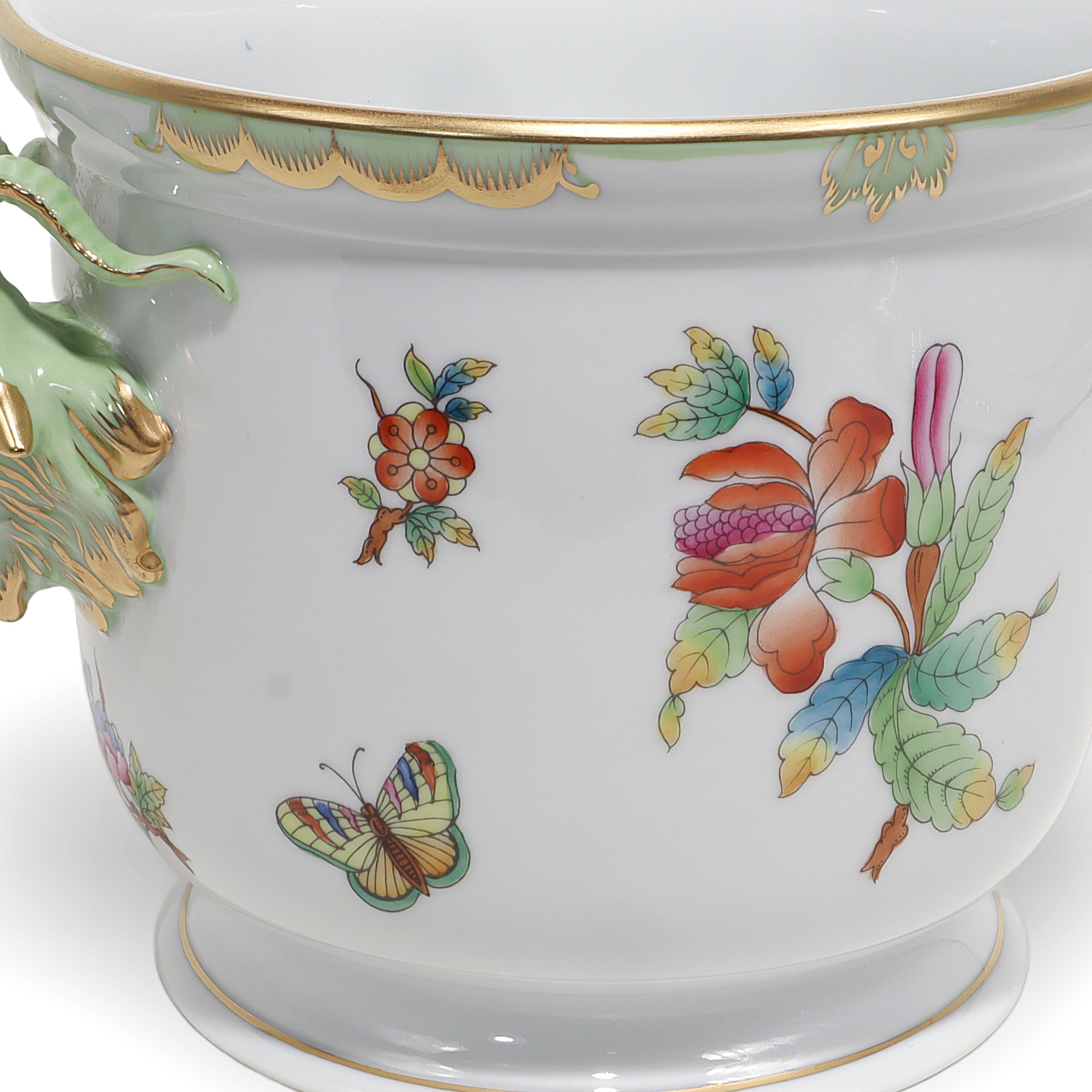
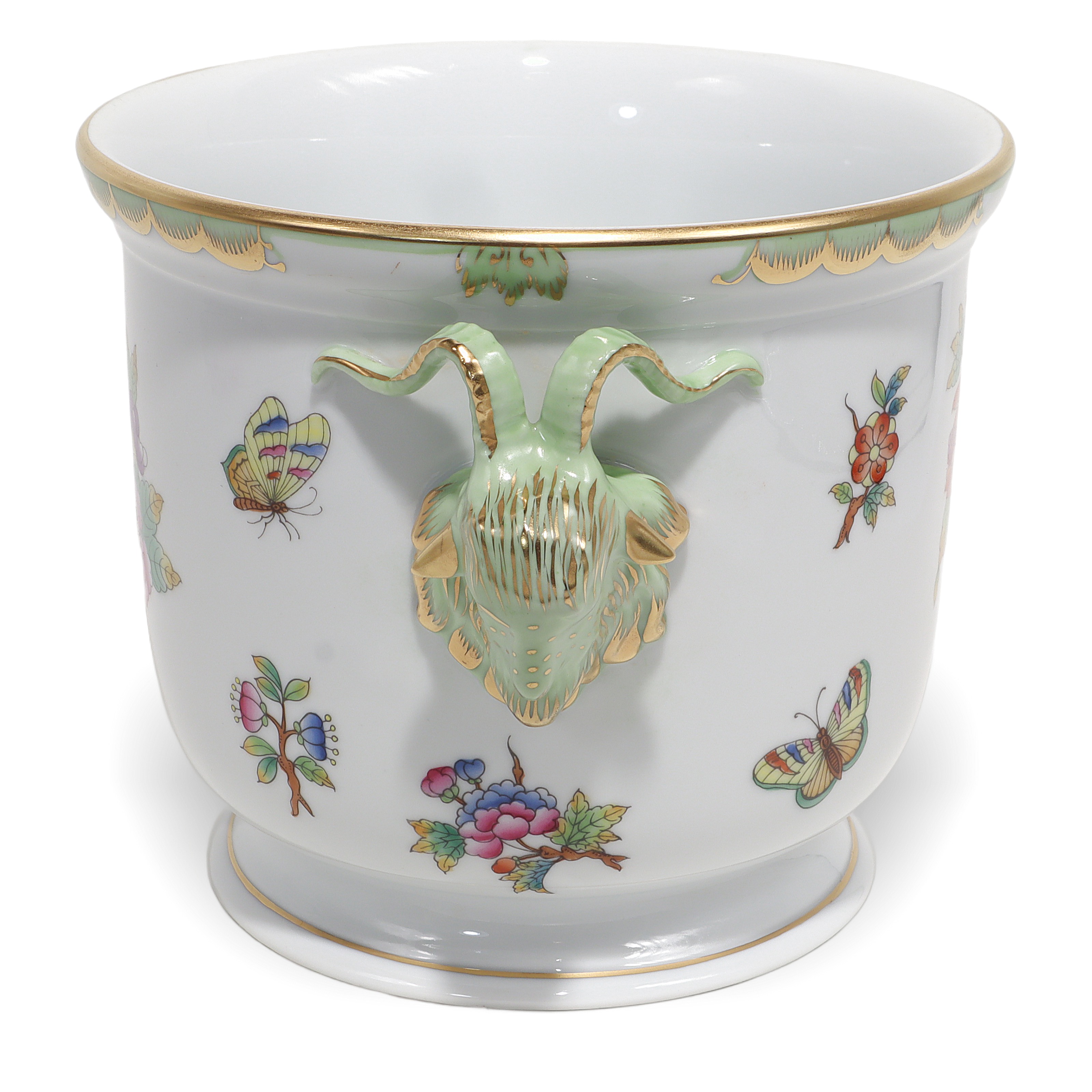
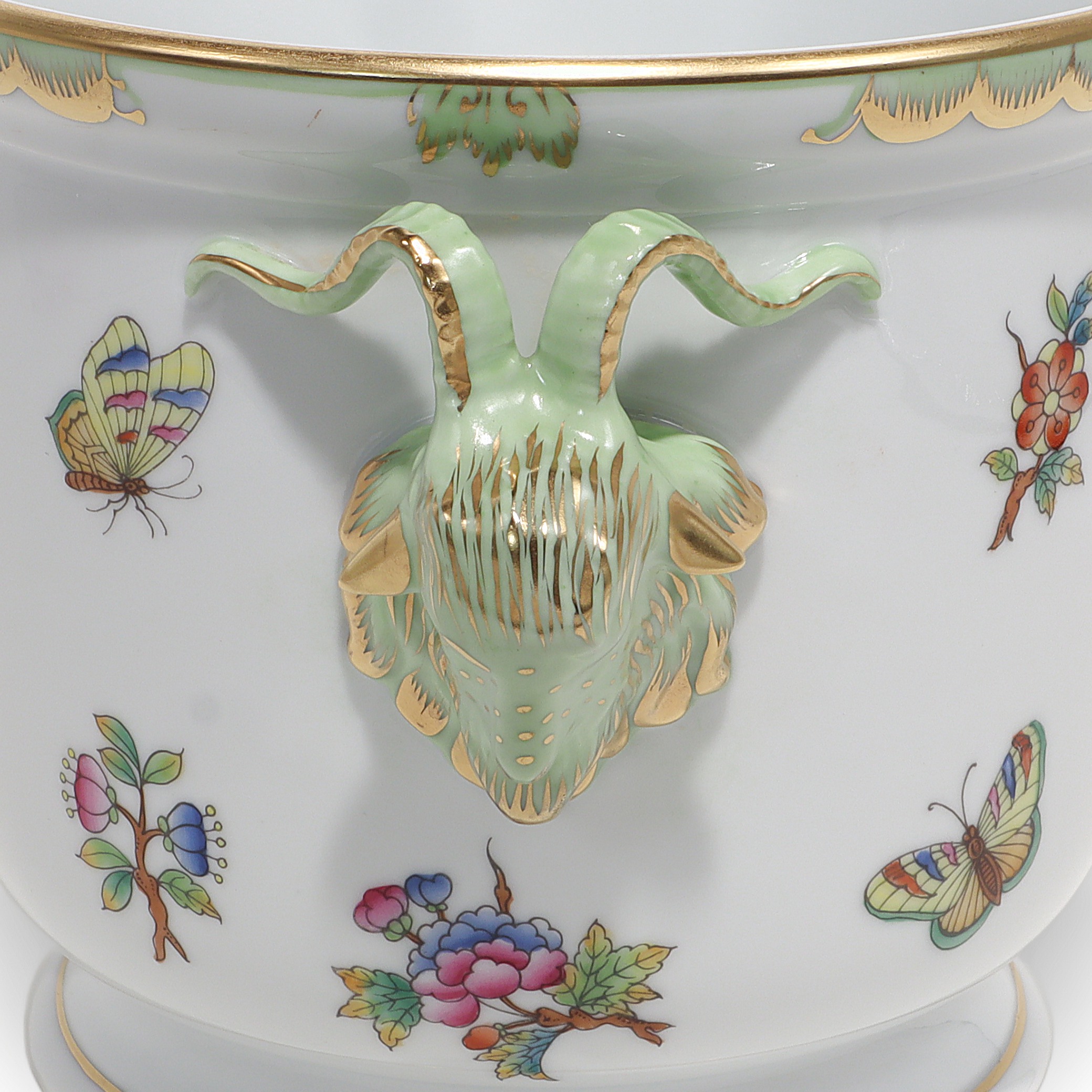
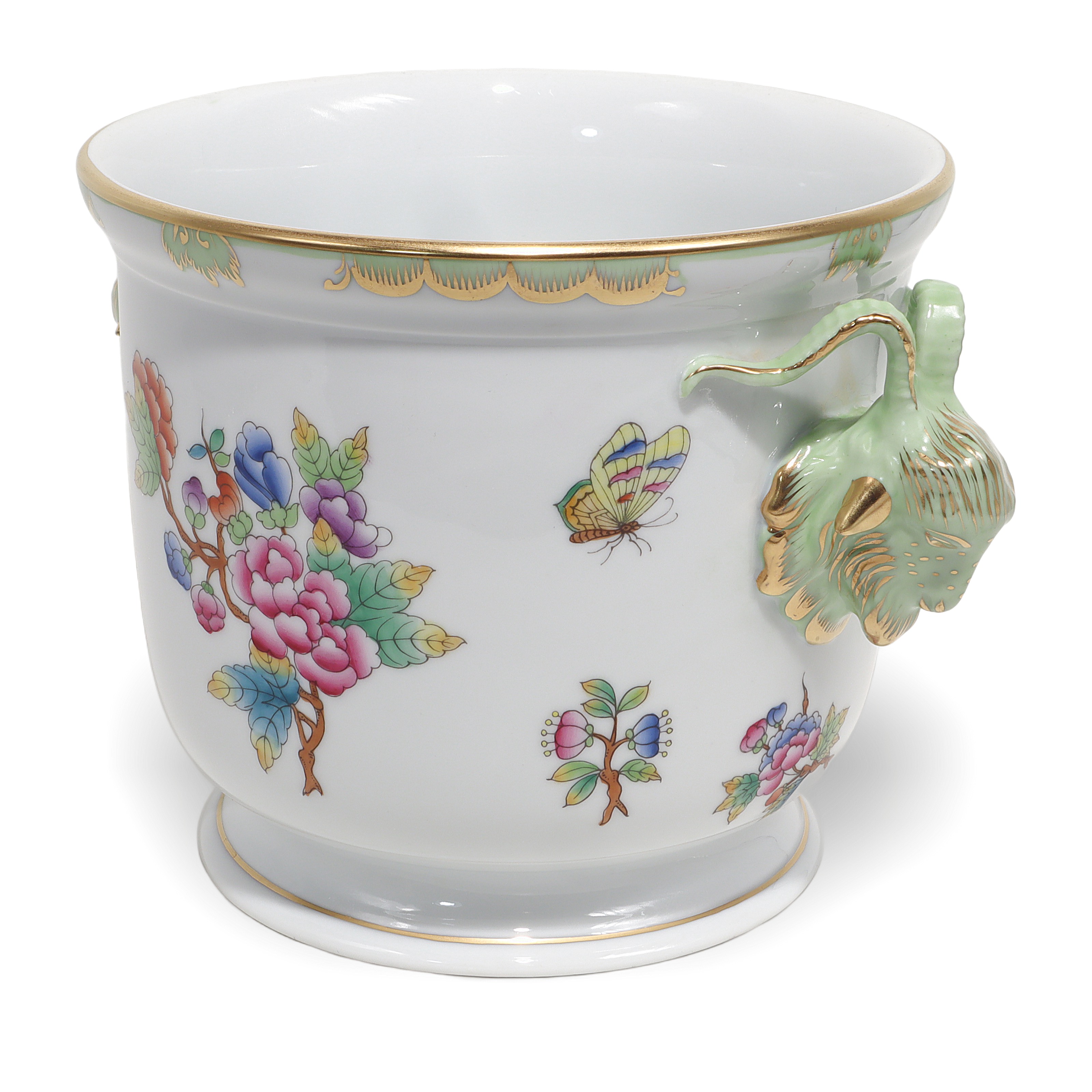
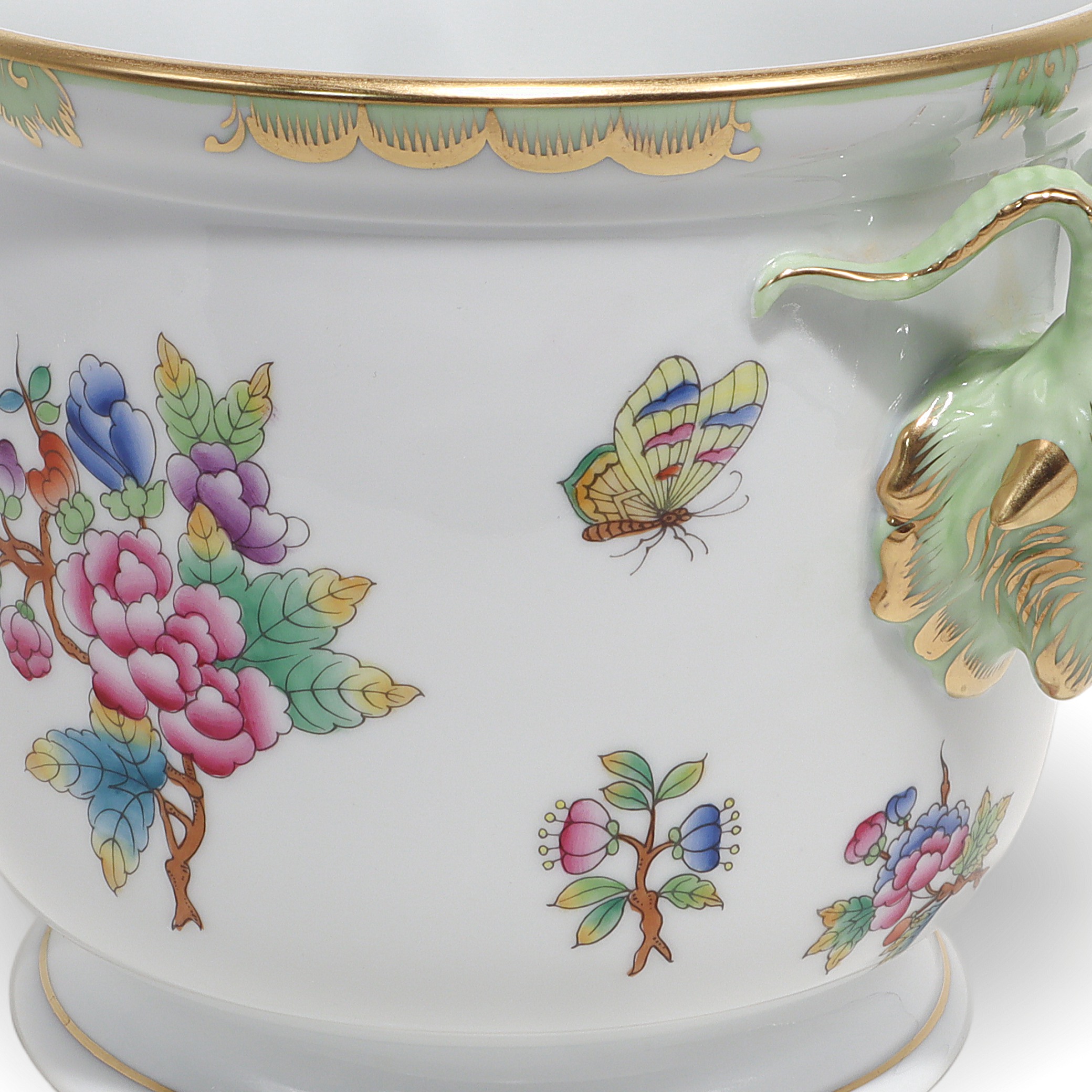
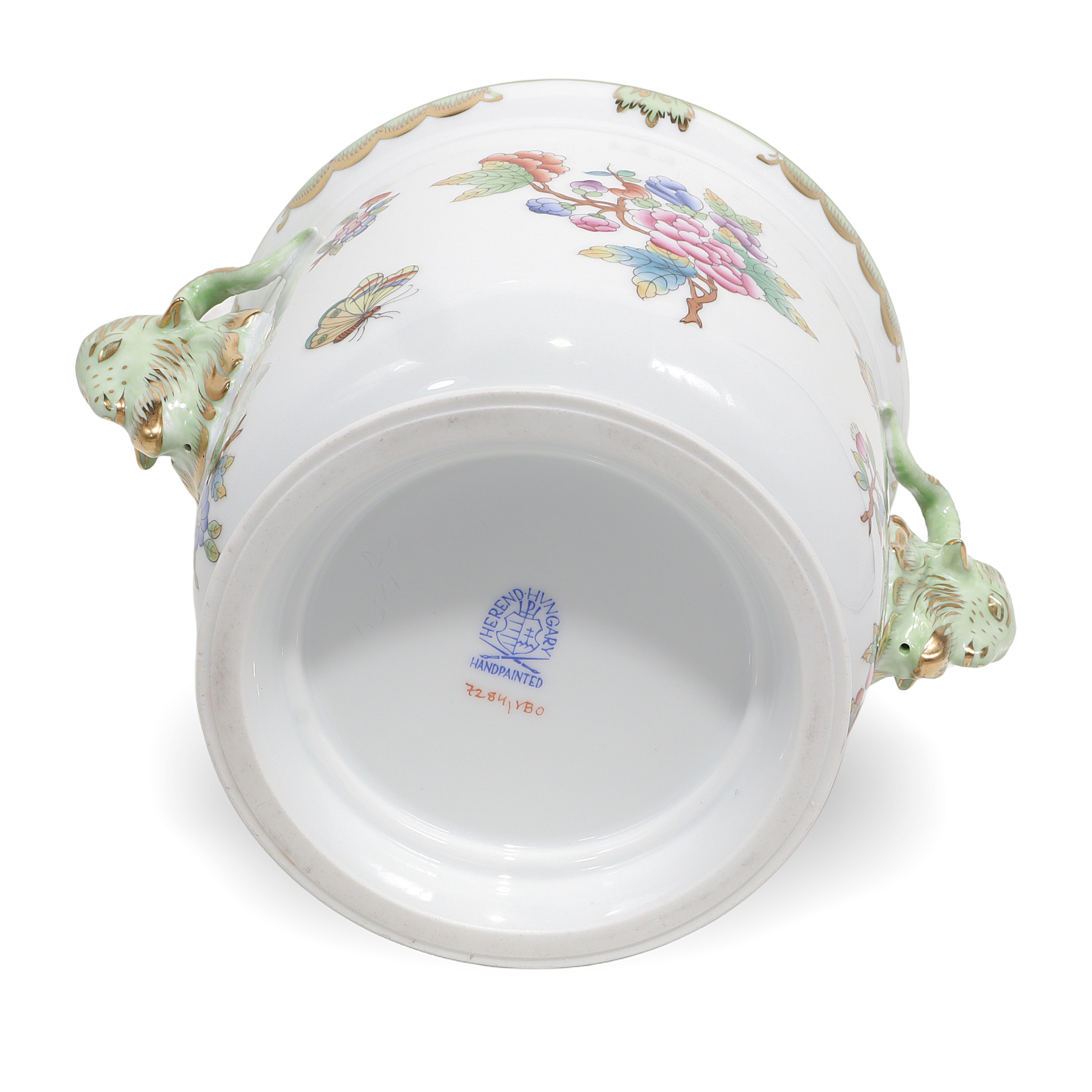
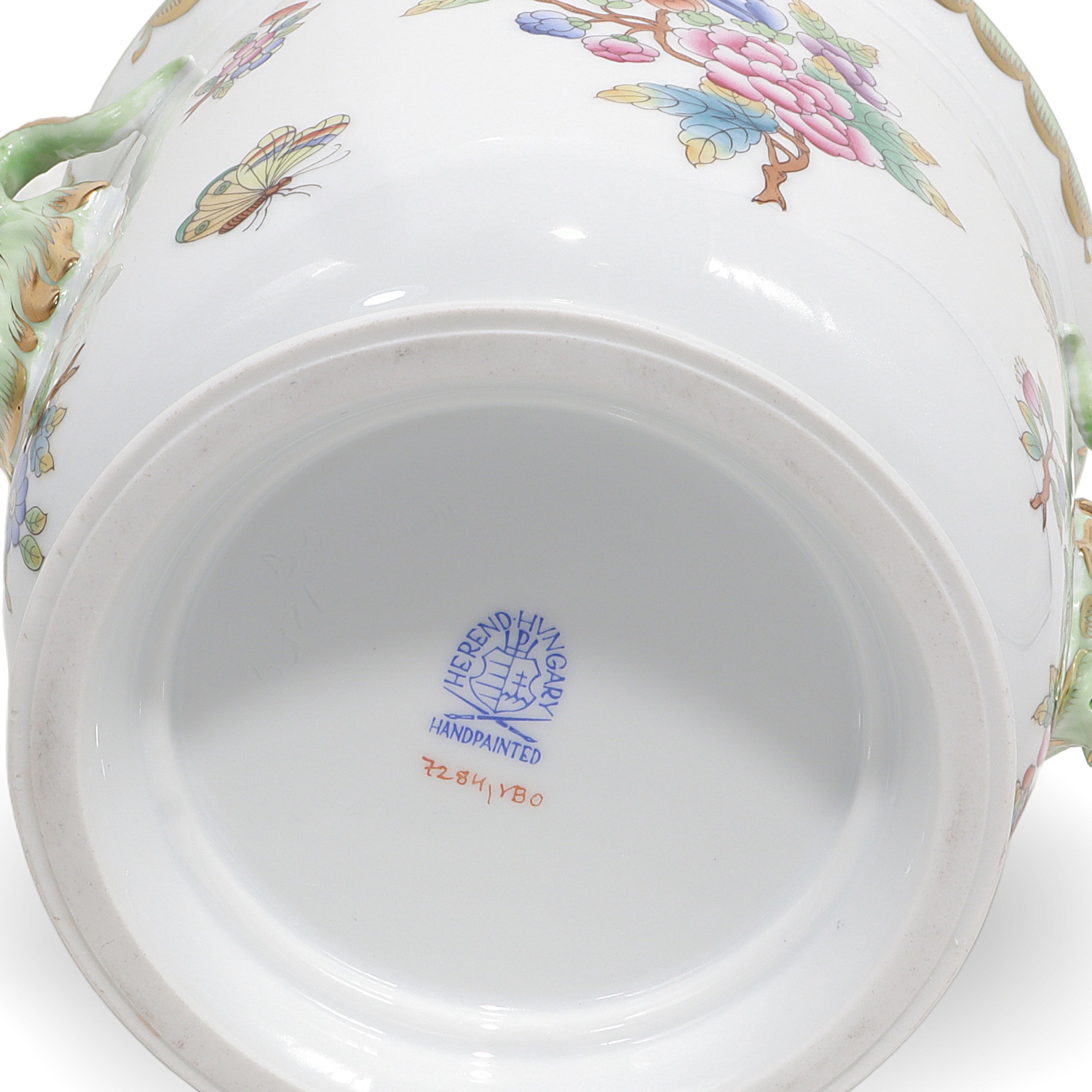
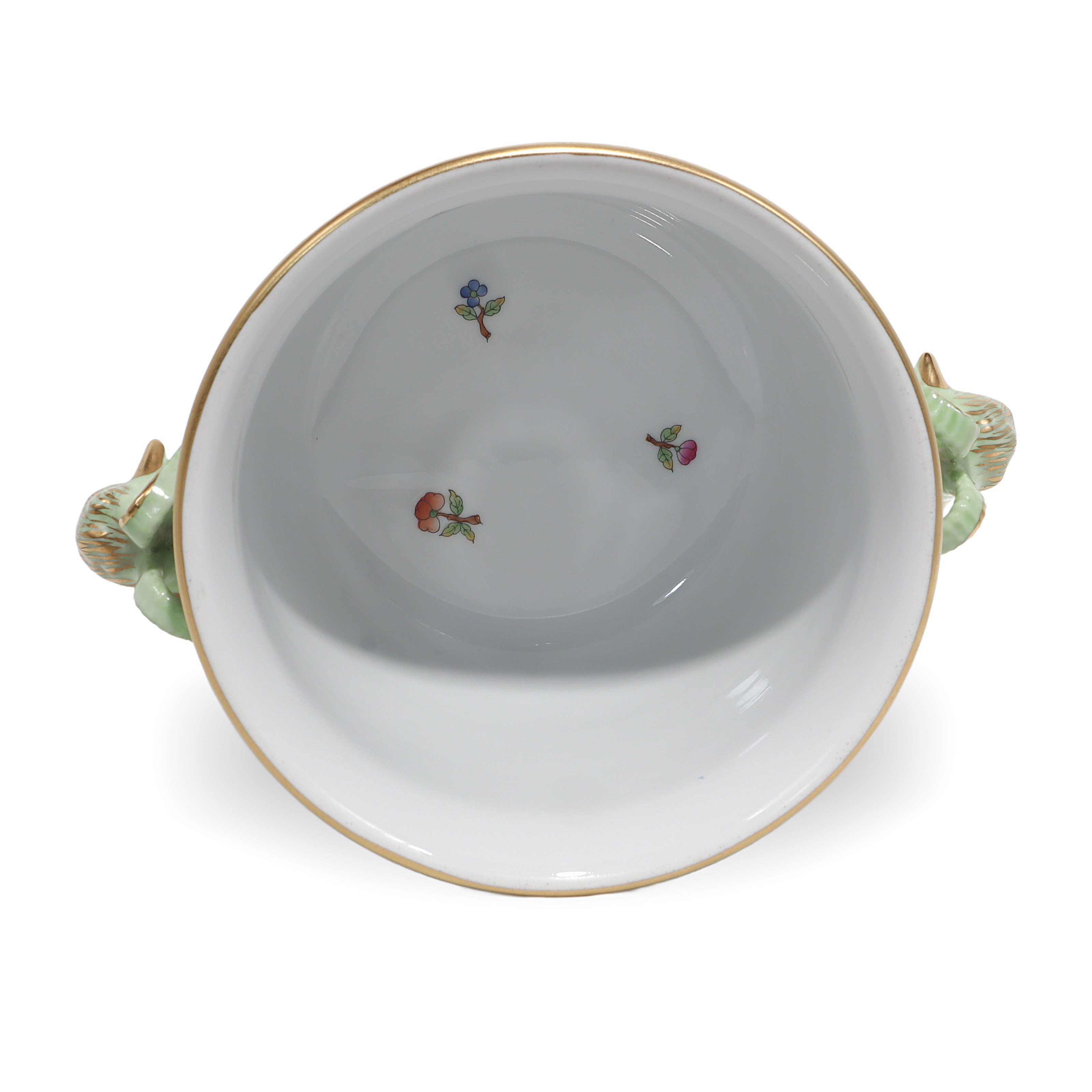
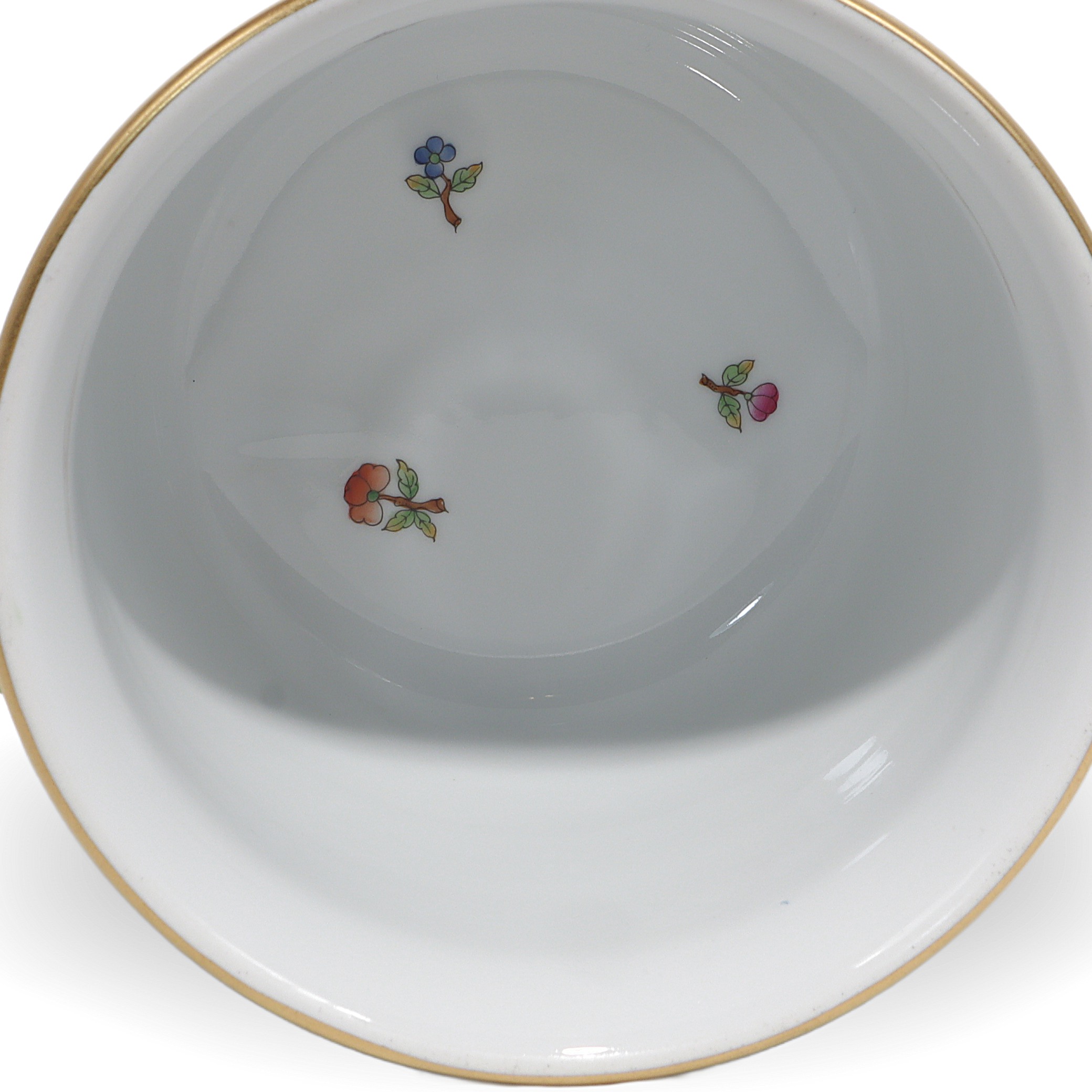
This is a Herend cachepot from around 1970, decorated in the Queen Victoria pattern and finished with sculpted ram-head handles. The white porcelain body is hand painted with bright peonies, leafy branches, and fluttering butterflies, then edged with real gold on the rim and foot. The handles are a soft mint green with gilded horns that catch the light. It measures about 5 inches high, 7.5 inches wide across the handles, and 5 inches in both length and diameter. Condition is near mint, with clean glaze and vivid colors, the kind of piece you can drop a small plant into or use as a stand-alone accent. At roughly 56 years old, it’s solidly vintage, and the ram-headed form is harder to find than basic bowls or vases.
Herend, founded in Hungary in 1826, is famous for hand-painted, hard-paste porcelain. The Queen Victoria design debuted at London’s Great Exhibition in 1851, where Queen Victoria ordered a service, giving the pattern its name. The motif mixes colorful flowers with butterflies and 24k gold trim; each piece is painted by an individual artist, so no two are exactly alike. Ram-head cachepots are a less common shape, which makes vintage examples like this one relatively scarce. Collectors prize crisp modeling, intact gilding, and strong, unfaded colors—all present here.